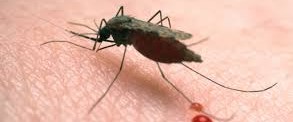
Malaria in a highland-fringe area of Ethiopia

Adugna Woyessa, Wakgari Deressa, Ahmed Ali and Bernt Lindtjorn. Prevalence of malaria infection in Butajira area, south-central Ethiopia. Malaria Journal 2012, 11:84

Background In 2005, the Ethiopian government launched a massive expansion of the malaria prevention and control programme. The programme was aimed mainly at the reduction of malaria in populations living below 2,000 m above sea level. Global warming has been implicated in the increase in the prevalence of malaria in the highlands. However, there is still a paucity of information on the occurrence of malaria at higher altitudes. The objective of this study was to estimate malaria prevalence in highland areas of south-central Ethiopia, designated as the Butajira area.

Methods Using a multi-stage sampling technique, 750 households were selected. All consenting family members were examined for malaria parasites in thick and thin blood smears. The assessment was repeated six times for two years (October 2008 to June 2010).

Results In total, 19,207 persons were examined in the six surveys. From those tested, 178 slides were positive for malaria, of which 154 (86.5%) were positive for Plasmodium vivax and 22 (12.4%) for Plasmodium falciparum; the remaining two (1.1%) showed mixed infections of Plasmodium falciparum and Plasmodium vivax. The incidence of malaria was higher after the main rainy season, both in lower lying and in highland areas. The incidence in the highlands was low and similar for all age groups, whereas in the lowlands, malaria occurred mostly in those of one to nine years of age.

Conclusion This study documented a low prevalence of malaria that varied with season and altitudinal zone in a highland-fringe area of Ethiopia. Most of the malaria infections were attributable to Plasmodium vivax.

New publication: EMAPS project on climate and malaria

Ellen Viste and Asgeir Sorteberg. Moisture transport into the Ethiopian highlands. Int. J. Climatol. (2011)  DOI: 10.1002/joc.3409 (pdf file)

ABSTRACT: The Ethiopian summer rains occur as air masses of various origins converge above the Ethiopian plateau. In this study, the relative importance of different moisture transport branches has been estimated using the Lagrangian trajectory model FLEXPART, and ERA-Interim reanalysis data, to backtrack air reaching the northern Ethiopian highlands in July–August 1998–2008. The Indian Ocean, the Congo Basin and the Red Sea were found to be important moisture source regions; for air from the Indian Ocean aided by a considerable moisture uptake along routes across the African continent. The following main transport branches were identified: (1) Flow from the Gulf of Guinea, (2) Flow from the Indian Ocean, and (3) Flow from the north; from the Mediterranean region across the Red Sea and the Arabian Peninsula. The largest contribution to the moisture transport into, and release of moisture within, the northern Ethiopian highlands, was associated with air traveling from the Indian Ocean and from the north. This was partly due to the relatively high mean specific humidity of this air, and partly because a large proportion of the air that reaches the highlands, follows these routes. As a total, the amount of moisture brought into the highlands from the north is 46% higher than from the south, whereas the contribution to moisture release within the highlands is about equal for air coming from the south and from the north. While previous studies have emphasized the importance of the Gulf of Guinea, we find that despite the high specific humidity of the low-level flow of air from the Gulf of Guinea, the amount of moisture carried into and released within the northern Ethiopian highlands through this branch, is much smaller than from the other branches – about 1/8 of that from the Indian Ocean. This is due to the fact that normally only a small proportion of the air reaching Ethiopia comes from the Gulf of Guinea