Torleif Markussen Lunde defended his PhD thesis on Monday August 19, 2013.
The title of the thesis is: «On the dynamics of two efficient malaria vectors of the Afrotropical region: Anopheles gambiae s.s and Anopheles arabiensis».
Abstract
Weather and climate are only some of the factors influencing the dynamics of malaria. With the ongoing debate on the consequences of climate change, there is a need for models which are designed to address these questions. Historically, models have fo- cused on the theoretical principles of eradication, with less emphasis on a changing environment. To estimate the potential impact of climate change on malaria, we need new models which consider a wider range of environmental variables.
In this thesis, we point at some factors which are important to robustly project the influence of climate and weather on malaria. These factors are described using a math- ematical model which focus on the weather sensitive parts of malaria transmission; the mosquitoes and the parasites.
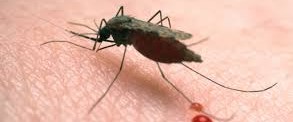
Mosquitoes transmitting malaria belong to the genus Anopheles. There are about 460 known anophelines, where 41 are considered to be dominant vectors of malaria. Each of these species have its own life history, and consequently weather and climate influence each species differently. In Africa, the public health impact of malaria is dev- astating, despite variable transmission. The most efficient mosquitoes are found in this continent: among them Anopehels gambiae sensu stricto and Anopheles arabiensis, which are considered to be of major importance.
In this thesis (Paper I) we describe a dynamical model which include these two species. Based on a literature review, we formulate a model which allows weather to influence each of the two species according to their life history. They compete over puddles, important for reproduction; An. gambiae s.s. mainly feed on humans op- posed to An. arabiensis which feed on cattle and humans; they are allowed to disperse, meaning new ares can be occupied by the species; and as they become older, the daily probability of survival changes. Many of these factors are not important in a short time perspective. But, since climate change is slow process compared to the life of a singe mosquito, there is a need for additional complexity to study how a slowly changing en- vironment influence the population dynamics of these malaria vectors.
To have confidence the model is realistic in the current climate we validated the model in paper II. To date, we constructed the most extensive database on the occur- rence of the two mosquitoes. These data were used to validate the model described in paper I. We concluded the mosquito model produced comparable or better results than existing predictions of the two species under current climate.
An. arabiensis feed on humans and cattle. Since the density and distribution of those are not static, but are changing over time, and the distribution of An. arabiensis is highly dependent on the density of cattle, there is a need to; 1. Document histori- cal changes; 2. Understand how they are influenced by the environment. In paper III we reconstruct the cattle distribution and density in the 1960s, and show how climate variability influence the national cattle holdings. While climate variability has a minor influence in many countries, we also find variations in the climate can explain more than 40% of the national cattle holdings in some countries. The data developed in this paper can be used in the model described in paper I, as well as other studies where cat- tle is an important part of the system.
It has been claimed the optimal temperature for malaria transmission is between 30 to 32◦C, with the potential increasing linearly from 20 to 32◦C. With this claim, any warming in sub-Saharan Africa would potentially cause more malaria. Using the model developed in paper I, we show malaria transmission is most effective around 25◦C, with a decline in efficiency over end below this temperature (Paper IV). This disputes the theory claimed in previous papers. Any projections relating temperature and malaria should be interpreted with care.
The influence of climate change on malaria transmission is still uncertain. With this thesis, we have come a step further in understanding how the environment can alter malaria transmission. However, the future occurrence of malaria is dependent on many other factors, including malaria control measures, access to and usage of treatment, city planning, and immunity.