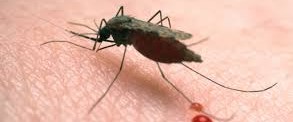
Model to validate species distribution and seasonal variation

This article is a validation of a mathematical model described earlier. Overall, the model gives a realistic representation of seasonal and year-to-year variability in mosquito densities and it can accurately predict the distribution of An. gambiae s.s. and An. arabiensis in sub-Saharan Africa. It may be used for seasonal and long-term predictions of changes in the burden of malaria.

Lunde TM, Balkew M, Korecha D, Gebre-Michael T, Massebo F, Sorteberg A and Lindtjørn B. A dynamic model of some malaria-transmitting anopheline mosquitoes of the Afrotropical region. II. Validation of species distribution and seasonal variations. Malaria Journal 2013, 12:78

Background  The first part of this study aimed to develop a model for Anopheles gambiae s.l. with separate parametrization schemes for Anopheles gambiae s.s. and Anopheles arabiensis. The characterizations were constructed based on literature from the past decades. This part of the study is focusing on the model’s ability to separate the mean state of the two species of the An. gambiae complex in Africa. The model is also evaluated with respect to capturing the temporal variability of An. arabiensis in Ethiopia. Before conclusions and guidance based on models can be made, models need to be validated.

 Methods  The model used in this paper is described in part one (Malaria Journal 2013, 12:28). For the validation of the model, a data base of 5,935 points on the presence of An. gambiae s.s. and An. arabiensis was constructed. An additional 992 points were collected on the presence An. gambiae s.l.. These data were used to assess if the model could recreate the spatial distribution of the two species. The dataset is made available in the public domain. This is followed by a case study from Madagascar where the model’s ability to recreate the relative fraction of each species is investigated. In the last section the model’s ability to reproduce the temporal variability of An. arabiensis in Ethiopia is tested. The model was compared with data from four papers, and one field survey covering two years.

Results  Overall, the model has a realistic representation of seasonal and year to year variability in mosquito densities in Ethiopia. The model is also able to describe the distribution of An. gambiae s.s. and An. arabiensis in sub-Saharan Africa. This implies this model can be used for seasonal and long term predictions of changes in the burden of malaria. Before models can be used to improving human health, or guide which interventions are to be applied where, there is a need to understand the system of interest. Validation is an important part of this process. It is also found that one of the main mechanisms separating An. gambiae s.s. and An. arabiensis is the availability of hosts; humans and cattle. Climate play a secondary, but still important, role.

Anopheles mosquitoes in three villages

This is a report on the Anopheles fauna found in three different villages located at three different altitudes ranging from 1,800 meters to 2,200 metres, showing the human/cattle blood meal preference for each species and the sporozoite rate and entomological inoculation rate for the vectors.

Animut A, Balkew M, Gebre-Michael T and Lindtjørn B. Blood meal sources and entomological inoculation rates of anophelines along a highland altitudinal transect in south-central Ethiopia. Malaria Journal 2013, 12:76 doi:10.1186/1475-2875-12-76

Background  The role of anophelines in transmitting malaria depends on their distribution, preference to feed on humans and also their susceptibility to Plasmodium gametocytes, all of which are affected by local environmental conditions. Blood meal source and entomological inoculation rate of anophelines was assessed along a highland altitudinal transect in south- central Ethiopia.

Methods  Monthly adult anopheline sampling was undertaken from July 2008 to June 2010 in Hobe (low altitude), Dirama (mid altitude) and Wurib (high altitude) villages located at average elevations of 1800 m, 2000 m and 2200 m, respectively. Anophelines were collected using CDC light trap, pyrethrum space spray catches (PSC) and artificial pit shelter methods. Upon collection, females were categorized according to their abdominal status and identified to species. Their human blood index, sporozoite rate and entomological inoculation rate was determined.

Results  A total of 4,558 female anophelines of which Anopheles arabiensis was the most prevalent (53.3%) followed by Anopheles demeilloni (26.3%), Anopheles christyi (8.9%), Anopheles pharoensis (7.9%) and Anopheles cinereus (3.6%) were caught and tested for blood meal source or sporozoite infection depending on their abdominal status. The proportions of human fed and bovine fed An. arabiensis were generally similar. In the low altitude village, there were 0.3% (1/300) and 0.2% (1/416) Plasmodium falciparum infected An. arabiensis among the CDC trap catches and PSC respectively. The percentage of Plasmodium vivax infected An. arabiensis were 3% (9/300) and 0.7(3/416) among the CDC and PSCs respectively in the village. In addition, there were 1.4% (1/71) and 50% (1/2) P. vivax infected An. pharoensis from the CDC light trap and PSCs, respectively. In the mid altitude village, 2.5% (1/40) and 1.7% (1/58) from among the CDC and PSCs of An. arabiensis respectively carried P. vivax sporozoites. Among the CDC light trap catches; there were 3.7 and 0 P. falciparum infective bites per year per household for An. arabiensis in the years July 2008 to June 2009 and July 2009 to June 2010 respectively in the low altitude village. The corresponding numbers for P. vivax infective bites for An. arabiensis were 33 and 14.5 in the same village. Space spray catches revealed 0.32 P. vivax infective bites per household for An. pharoensis during the first year in the low altitude village.

Conclusion  Anopheles arabiensis was the most prevalent vector of P. vivax and P. falciparum malaria in the low and mid altitude villages followed by An. pharoensis. Annual entomological inoculation rates showed that vivax malaria transmission was higher than that of the falciparum and both decreased with increase in altitude.

Insecticide resistance in Southwest Ethiopia

The greater tendency of An. arabiensis to feed on cattle justifies the application of insecticides on cattle to provide a significant protection from malaria infection. But, An. arabiensis has already developed resistance to the available insecticides, and alternative insecticides are needed.

Massebo F, Balkew M, Gebre-Michael T and Lindtjørn B. Blood meal origins and insecticide susceptibility of Anopheles arabiensis from Chano in South-West Ethiopia. Parasites & Vectors 2013, 6:44 doi:10.1186/1756-3305-6-44

Background  Anopheles arabiensis, the main malaria vector in Ethiopia, shows both anthropophilic and zoophilic behaviours. Insecticide resistance is increasing, and alternative methods of vector control are needed. The objectives of this study were to determine the blood meal origins and the susceptibility to insecticides of An. arabiensis from Chano village near Arba Minch in South-West Ethiopia.

Methods  Blood meal sources of anopheline mosquitoes collected using Centers for Disease Control and Prevention (CDC) light traps and pyrethrum spray catches (PSC) from human dwellings, and hand-held mouth aspirators from outdoor pit shelters were analysed using a direct enzyme-linked-immunosorbent assay (ELISA). The susceptibility of An. arabiensis to pyrethroid insecticides (alphacypermethrin, lambdacyhalothrin, deltamethrin, and cyfluthrin) and DDT was assessed using females reared from larval and pupal collections from natural breeding sites.

Results  The blood meal origins of 2967 freshly fed Anopheles mosquitoes were determined. An. arabiensis was the predominant species (75%), and it fed mainly on cattle. The densities of both freshly fed An. arabiensis and those fed on human blood followed similar seasonal patterns. The overall human blood index (HBI) of An. arabiensis, including mixed blood meals, was 44% and the bovine blood index (BBI) was 69%. The HBI of An. arabiensis from CDC light trap collections was 75% and this was higher than those for PSC (38%) and outdoor pit shelter collections (13%), while the BBI was 65% for PSC, 68% for outdoor pit shelters and 72% for CDC light traps. More freshly fed and human blood-fed An. arabiensis were sampled from houses close to the shore of Lake Abaya (the major breeding site). A high proportion of An. arabiensis was resistant to the pyrethroid insecticides, with a mortality rate of 56% for lambdacyhalothrin, 50% for cyfluthrin and alphacypermethrin, 47% for deltamethrin, and 10% for DDT.

Conclusion  Anopheles arabiensis is the predominant species of anopheline mosquito in this region, and cattle are the main source of its blood meals. The greater tendency of this species to feed on cattle justifies the application of insecticides on cattle to control it. However, An. arabiensis has already developed resistance to the available pyrethroid insecticides, and alternative insecticides are needed for malaria vector control.