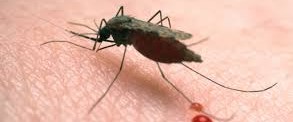
Malaria model

This study highlights some of the assumptions commonly used when constructing mosquito-malaria models and presents a realistic model of Anopheles gambiae s.s. and Anopheles arabiensis, and their interaction.

We make a case that this new mosquito model, OMaWa, may improve the understanding of vector dynamics, which in turn can be used to better understand the dynamics of malaria.

Lunde TM, Korecha D, Loha E, Sorteberg A and Lindtjørn B. A dynamic model of some malaria-transmitting anopheline mosquitoes of the Afrotropical region. I. Model description and sensitivity analysis. Malaria Journal 2013, 12:28

Background: Most of the current biophysical models designed to address the large-scale distribution of malaria assume that transmission of the disease is independent of the vector involved. Another common assumption in these type of model is that the mortality rate of mosquitoes is constant over their life span and that their dispersion is negligible. Mosquito models are important in the prediction of malaria and hence there is a need for a realistic representation of the vectors involved.

Results: We construct a biophysical model including two competing species, Anopheles gambiae s.s. and Anopheles arabiensis. Sensitivity analysis highlight the importance of relative humidity and mosquito size, the initial conditions and dispersion, and a rarely used parameter, the probability of finding blood. We also show that the assumption of exponential mortality of adult mosquitoes does not match the observed data, and suggest that an age dimension can overcome this problem.

Conclusions: This study highlights some of the assumptions commonly used when constructing mosquito-malaria models and presents a realistic model of An. gambiae s.s. and An. arabiensis and their interaction. This new mosquito model, OMaWa, can improve our understanding of the dynamics of these vectors, which in turn can be used to understand the dynamics of malaria.

Malaria models and temperature

With global warming a reality, we show how the projected changes in malaria transmission will depend on which Anopheles mortality model is used to make such predictions

Lunde TM, Bayoh NM and Lindtjørn B. How malaria models relate temperature to malaria transmission. Parasites & Vectors 2013, 6:20 doi:10.1186/1756-3305-6-20

Background It is well known that temperature has a major influence on the transmission of malaria parasites to their hosts. However, mathematical models do not always agree about the way in which temperature affects malaria transmission.

Methods In this study, we compared six temperature dependent mortality models for the malaria vector Anopheles gambiae sensu stricto. The evaluation is based on a comparison between the models, and observations from semi-field and laboratory settings.

Results Our results show how different mortality calculations can influence the predicted dynamics of malaria transmission.

Conclusions With global warming a reality, the projected changes in malaria transmission will depend on which mortality model is used to make such predictions.

Use of bed nets to prevent malaria

The objective of this study was to characterize the pattern related to ITN use in one village in south Ethiopia. A huge discrepancy was reported between ownership versus utilization of insecticide-treated bed nets (ITNs). To acquire the benefits of ITNs, households need to use and not merely own them.

Eskindir Loha, Kebede Tefera and Bernt Lindtjørn. Freely distributed bed-net use among Chano Mille residents, south Ethiopia: a longitudinal study. Malaria Journal 2013, 12:23 doi:10.1186/1475-2875-12-23

Background: A huge discrepancy was reported between ownership versus utilization of insecticide-treated bed nets (ITNs). To acquire the benefits of ITNs, households need to use and not merely own them. The objective of this study was to characterize the pattern of, and assess factors related to ITN use in one village in south Ethiopia.

Methods: A prospective cohort study involving 8,121 residents (in 1,388 households) was carried out from April 2009 to April 2011 (101 weeks). Every week, individuals were asked whether they slept under an ITN the night before the interview. Descriptive statistics was used to report the availability and use of ITN. A negative, binomial, probability, distribution model was fitted to find out significant predictors of ITN use. Reasons for not using ITN were summarized.

Results: The total number of ITNs available at the beginning of the study was 1,631 (1.68 ITNs per household). On week 48, 3,099 new ITNs (PermaNet2.0) were distributed freely (2.3 ITNs per household). The number of households who received at least one new ITN was 1,309 (98.4%). The percentage of children <5 years and pregnant women not using ITNs exceeded that of other adults. The mean (range; SD) ITN use fraction before and after mass distribution was 0.20 (0.15-0.27; 0.03) and 0.62 (0.47-0.69; 0.04), respectively. Before mass ITN distribution, the most frequent reason for not using ITN was having worn out bed nets (most complained the bed nets were torn by rats); and after mass ITN distribution, it was lack of convenient space to hang more than one ITN. Males, younger age groups (mainly 15–24 years) and those living away from the vector-breeding site were less likely to use ITN.

Conclusions: The ITN use fraction reached to a maximum of 69% despite near universal coverage (98.4%) was achieved. Gender, age differences and distance from vector breeding site were associated with ITN use. Strategies may need to be designed addressing disproportions in ITN use, lack of convenient space to hang more than one ITN (for those receiving more than one), and measures to prolong usable life of ITNs.